Category: Uncategorized

  • Representative Rugby: Eagles, Mustangs, and Toast?

    Representative Rugby: Eagles, Mustangs, and Toast?

    Representing More Than the Harlequins

    Since 1971, Dallas Harlequins players and coaches have proudly worn more than just the green and black.

    Some arrived as established internationals. Others earned their first national team opportunities while wearing the green and black. Still others used their time with the Quins as a springboard to the highest levels of the game.

    Throughout our history, the Harlequins have proudly welcomed Eagles, international representatives, and professional players from across the rugby world. Their presence has elevated the standard of our club while creating lasting connections that extend far beyond Dallas.

    For example:

    • Taylor Mokate, Justin Boyd, and Zac Mizell who developed with the Harlequins before earning selection to the USA Eagles.
    • Or Benson Salem Adoyo, who joined the Quins shortly after arriving in the United States and soon earned selection for Kenya 7s, continuing that nation’s proud rugby tradition.
    • Or more recently, Reese Francis and Abbas Bangash are active Quins who recently got their first international starts for their respective countries – Mexico and Pakistan.

    These names represent only a small part of the club’s international story.
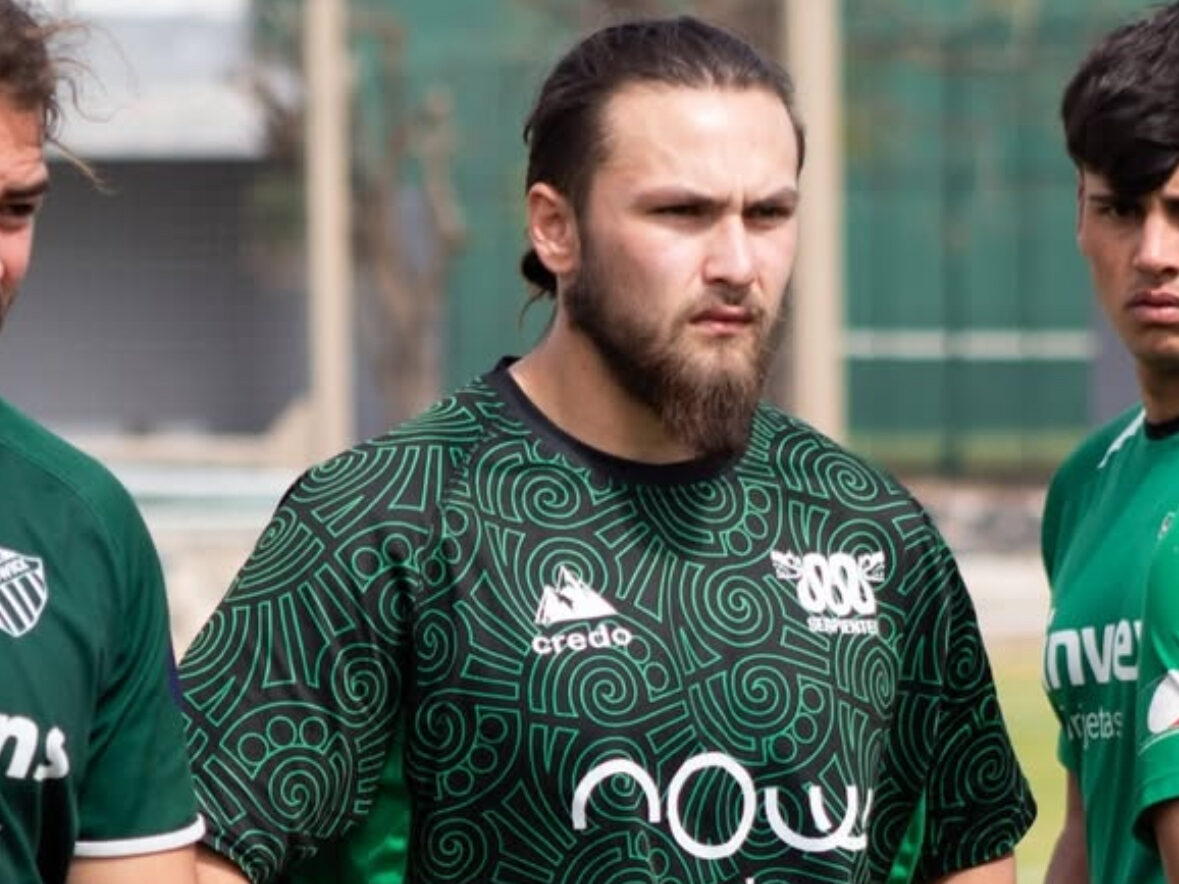
    Reese Francis Playing for Serpientes XV

    From regional select sides to national teams, Quins have consistently earned opportunities to represent their city, their region, and their country. These honors are more than individual achievements—they reflect the strength of the club and its long-standing commitment to developing players capable of competing at the highest levels of the game.

    While our Player History page celebrates individual accomplishments, this page recognizes the programs and representative teams that have carried the Harlequins name onto bigger stages.


    The USA West Era

    Before today’s regional representative pathways existed, the Dallas Harlequins were a proud member of the Western RFU, competing alongside clubs from across the western half of the United States.
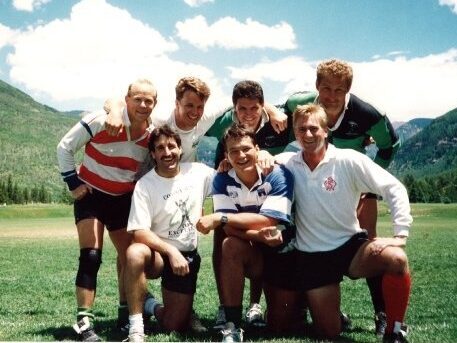
    Quins in Vail Before facing France with the USA Mustangs

    The club played a major role in the Union for many years, regularly hosting Western Union tournaments and consistently supplying players to the USA West Mustangs, one of the country’s premier representative sides.

    For many Quins, earning selection to the Mustangs was the final step before USA Eagles consideration.

    One of the defining moments in that history came in 1991, when the USA West Mustangs faced the touring French National Team. The squad featured several Dallas Harlequins players, highlighting the respect our club had earned across American rugby.
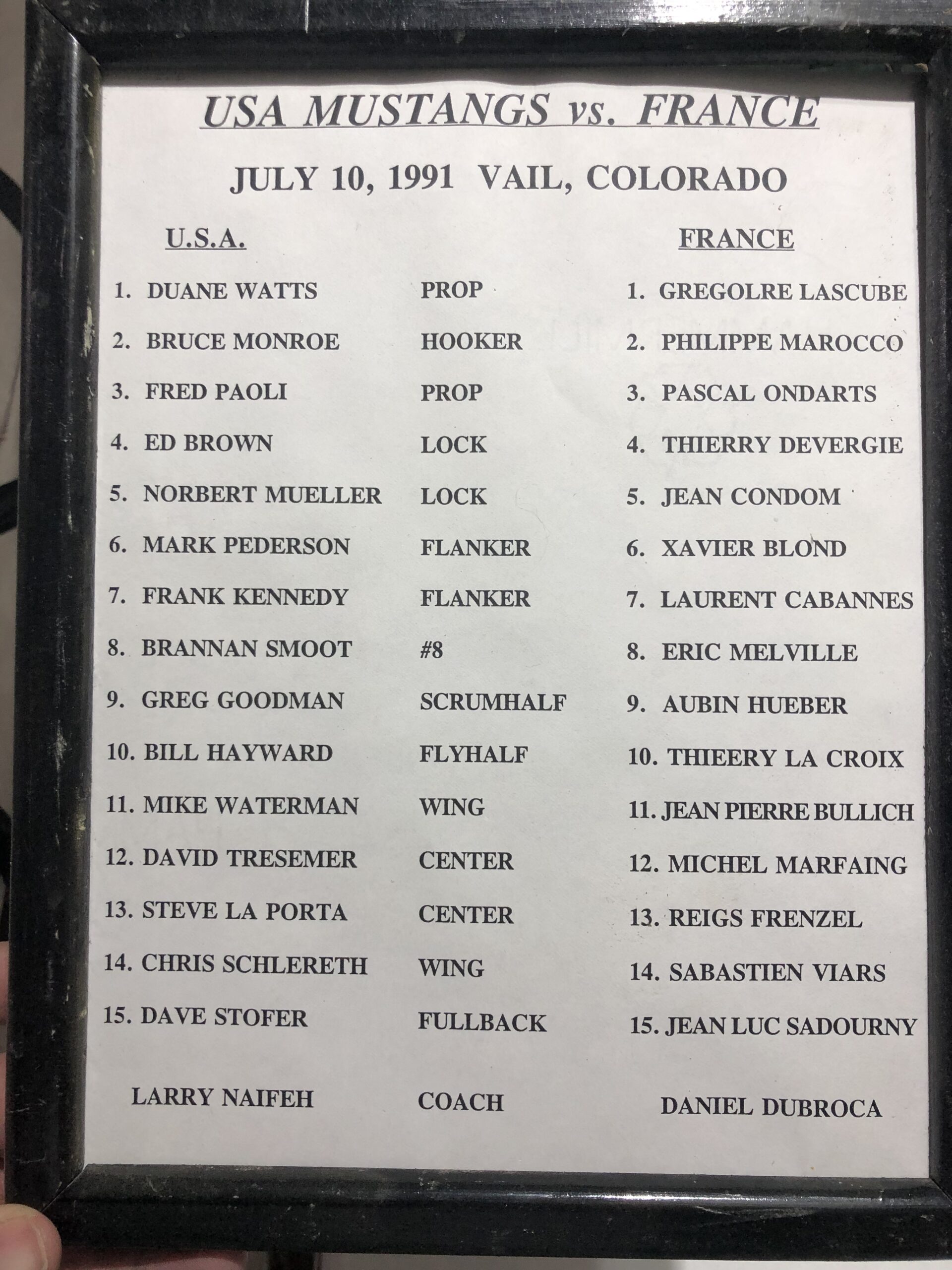
    That France team came over as a tune-up for the 1991 World Cup. We had them tied 9-9 at half, lost by 19. They took 3rd that year and should have been in the finals. That pack was feared. – Duane ‘Tiny’ Watts

    The Western Union era helped establish the Harlequins as one of the country’s premier rugby clubs and laid the foundation for generations of representative success that followed.


    Building Texas Rugby

    As rugby continued to grow throughout Texas, representative competition evolved with it.

    The Dallas Harlequins have been deeply involved in the Texas Rugby Union (TRU) since its earliest days, providing players, coaches, administrators, and leaders who helped build representative rugby across the state.

    Beyond players, Mary Waller and Miles Herring recently helped coach the Texas Toast (Women’s TRU Select Side).
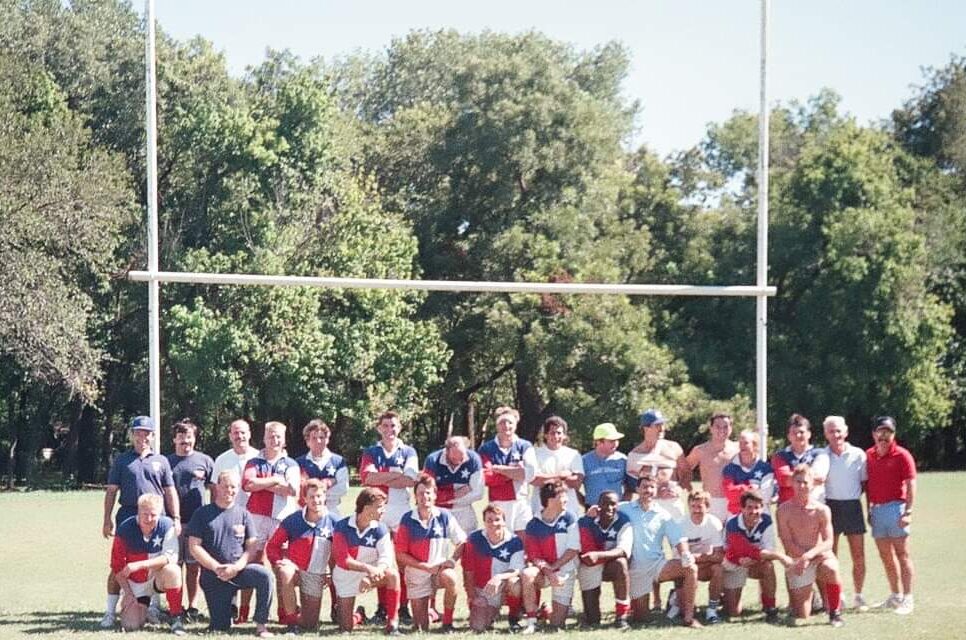
    TRU UK Tour 1995

    Generation after generation, Quins have earned selection to Texas representative teams, proudly wearing the TRU colors while continuing the club’s tradition of excellence.

    That involvement continues today.

    The success of Texas rugby has never belonged to a single club—but the Dallas Harlequins have proudly been part of that story from the very beginning.


    Beyond Club Rugby

    Representative rugby doesn’t end with state selection.

    Many Harlequins have continued their rugby journeys through additional representative pathways that bridge the gap between club competition and international rugby.
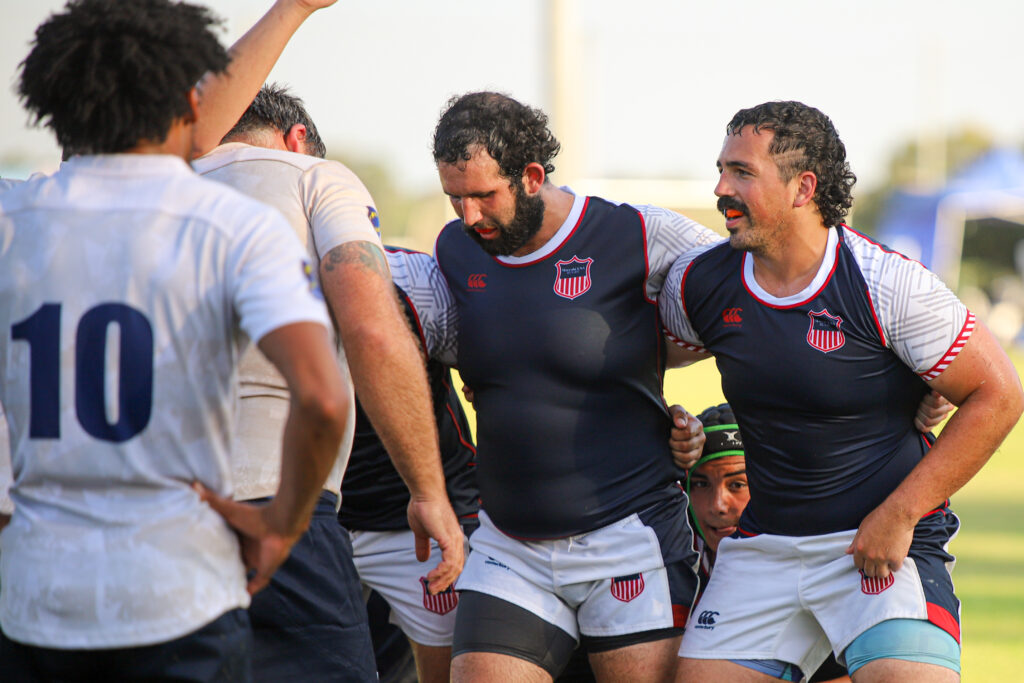
    Zach Getson with Maccabi USA in 2022, joining Lee Goodman and Kurt Kirsch as Maccabi Quins

    These opportunities have included organizations such as:

    • Maccabi USA Rugby, representing the United States in international Jewish sporting competitions.
    • USA Rugby South, showcasing top players from across the southern United States.
    • USA Falcons, a national development side providing players with exposure to higher levels of competition.

    These programs give athletes opportunities to test themselves against stronger opposition, gain valuable experience, and continue progressing toward the highest levels of the sport.

    For the Harlequins, they also reinforce a long-standing tradition: when representative teams are assembled, Quins are consistently part of the conversation.


    A Tradition That Continues

    Representative honors are never guaranteed.

    They are earned through years of hard work, dedication, and excellence on and off the field.

    For generations, Dallas Harlequins have answered that call—whether representing the Western Union, Texas Rugby Union, regional development programs, national select sides, or the United States itself.
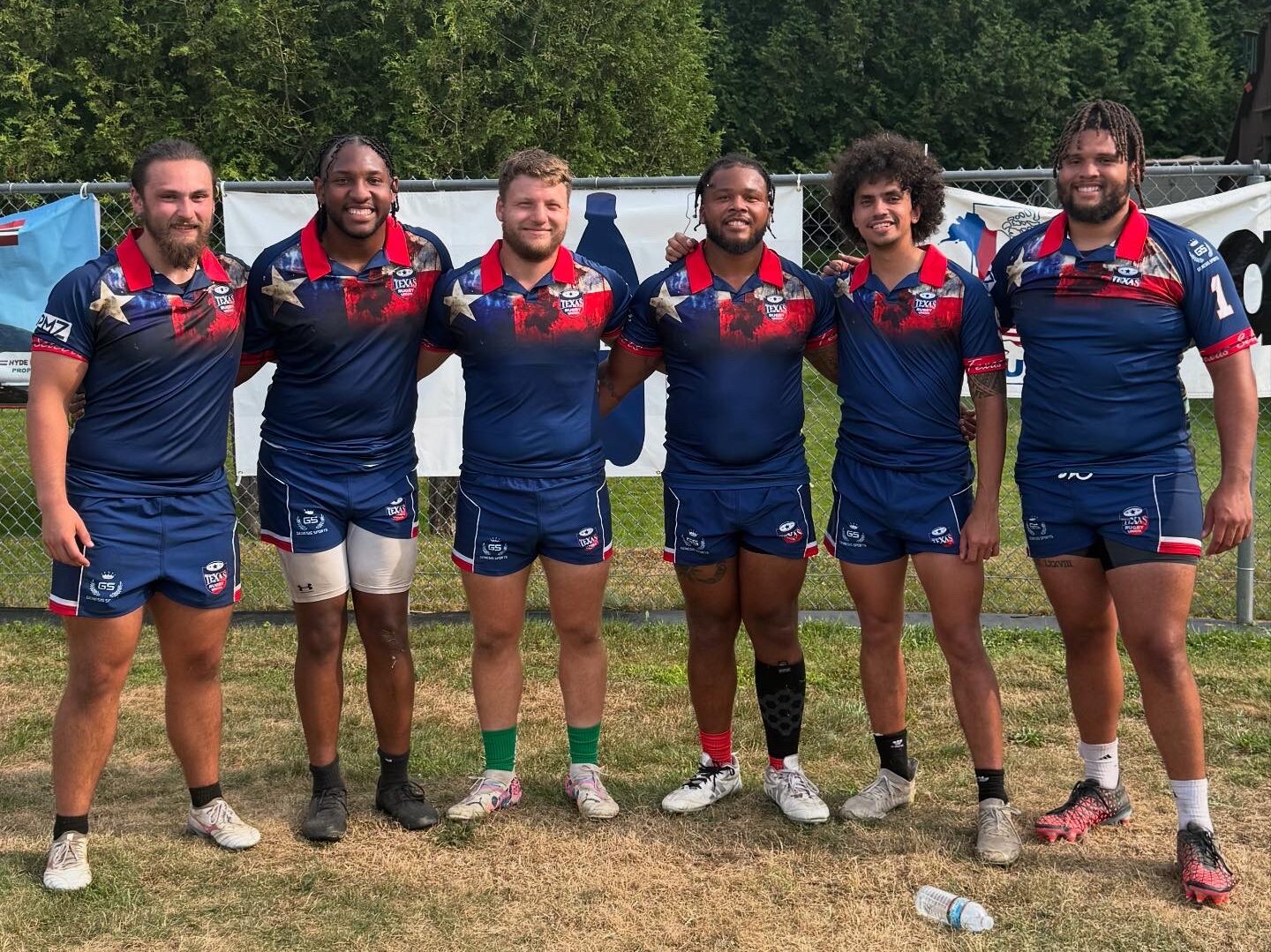
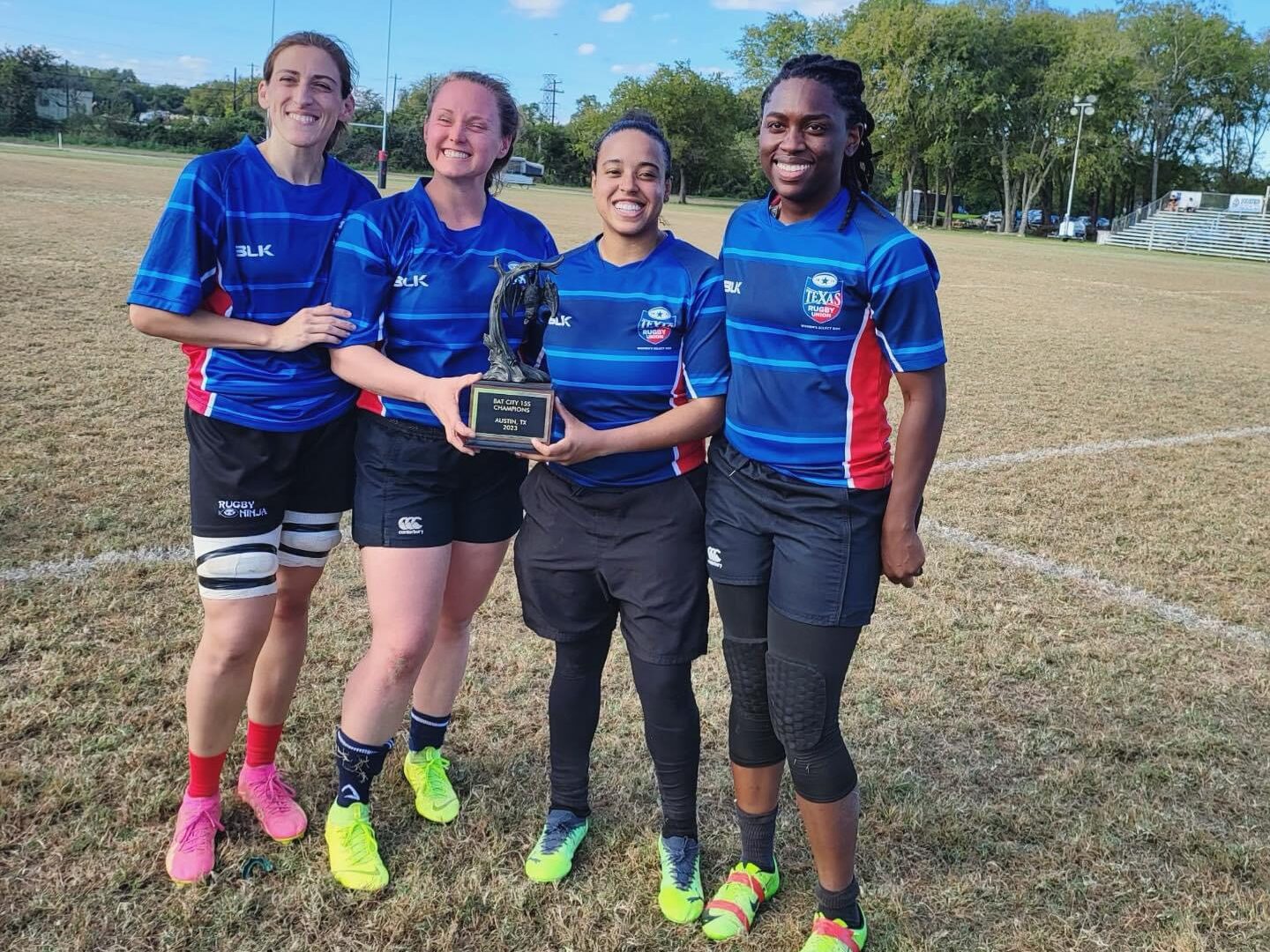
    Two recent examples of Quins playing for the TRU (of many we could have picked)

    Every player selected, every coach appointed, and every administrator trusted to lead at the next level reflects the culture of excellence that has defined the Harlequins since 1971.

    We’re proud to be developing rugby in America, in all the ways we can.

    Come On You Quins!
  • The Rugby Super League – Building America’s Premier Rugby Competition

    The Rugby Super League – Building America’s Premier Rugby Competition

    Oh, the good ole’ days. It’s hard to know you’re in them before they’re gone. But now we know. These were them.

    Before professional rugby arrived in the United States, there was the Rugby Super League.

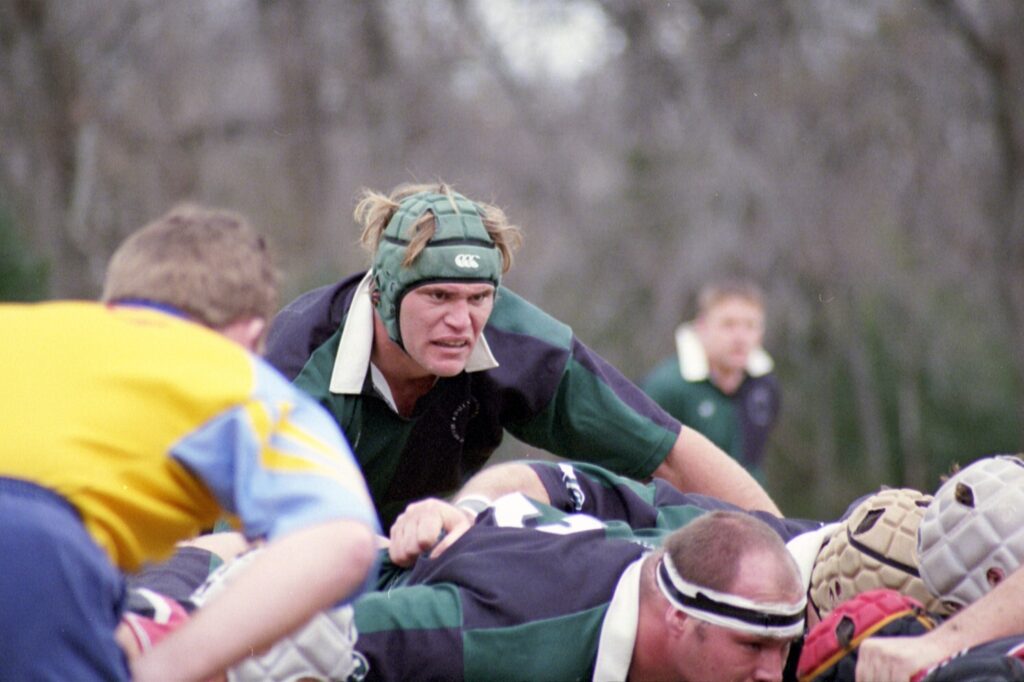
    Brett ‘Rangi’ Pedersen Circa 2002, a Super League Stalwart, and a Quin Legend

    From 1997 through 2012, the Rugby Super League (RSL) served as the highest level of club rugby in America. Created to bring together the nation’s strongest clubs in a true national competition, the league became the proving ground for many of the country’s top players, coaches, and administrators. For fifteen seasons, the Dallas Harlequins stood at the center of that effort. Not only were the Quins founding members of the competition, but the club’s leaders also played a significant role in shaping the league itself.

    When the inaugural Rugby Super League season kicked off in 1997, the Dallas Harlequins were one of just fourteen clubs selected from across the country to compete. The league represented a major shift in American rugby. For the first time, elite clubs would regularly travel across regions and conferences to compete in a national premier competition. It was a bold undertaking in an era before professional rugby, when clubs relied heavily on volunteers, fundraising, and members’ dedication to sustain national-level competition. You can still see some of their legacy in the Premiership competitions around the nation.

    The Harlequins would remain part of the competition for its entire existence. While teams came and went over the years, Dallas was one of a small group of clubs that helped define the league from its beginning until its conclusion in 2012.

    Keith Engelbrecht and the Creation of the Super League

    Few individuals had a greater impact on the early success of the Rugby Super League than Dallas Harlequin Keith Engelbrecht.

    A longtime first-team player, captain, club president, Texas Rugby Union officer, and national rugby administrator, Keith was instrumental in the formation and solidification of the Super League.

    As the league matured, Keith’s influence continued to grow. In 2001, when USA Rugby formally recognized the Rugby Super League as the nation’s premier competition, Keith was elected Chairman of the league’s Executive Committee. In that role, he helped guide the direction of elite American club rugby during one of the most important periods in the league’s history.

    The Engelbrecht Legacy Continues

    The Harlequins’ influence on the Super League did not end with Keith.

    His brother, Michael “Moley” Engelbrecht, was one of the defining players of the club’s dominant era in Texas rugby before becoming one of the most respected coaches in the United States. Michael led the Harlequins during their Super League years and helped develop countless players who would go on to represent Texas, regional all-star sides, and national age-grade programs. His coaching career eventually extended to USA Rugby pathways, including the USA U19S, USA U20S, and numerous national development programs.

    The impact of the Engelbrecht family stretched across generations. Michael’s son, Jason Engelbrecht, also suited up for the Dallas Harlequins during the Super League era, representing a third vector of leadership and commitment to elite rugby in Dallas.

    The family’s contributions have been formally recognized by the Texas Rugby Hall of Fame. Michael was inducted in 2019 for his decades of service as a player, coach, and mentor, while Keith followed in 2022 for his influence as a player, administrator, and founder of the Super League.

    Raising the Standard in Texas

    Competing in the Super League demanded a level of commitment rarely seen in American amateur sports. Teams traveled thousands of miles each season to face clubs such as Belmont Shore, Golden Gate, Denver Barbarians, Old Blue, and Chicago Lions. The competition exposed Dallas players to the highest standard of club rugby available in the country and helped establish Texas as a serious rugby region on the national stage.

    And, don’t even get us started on the road trips …

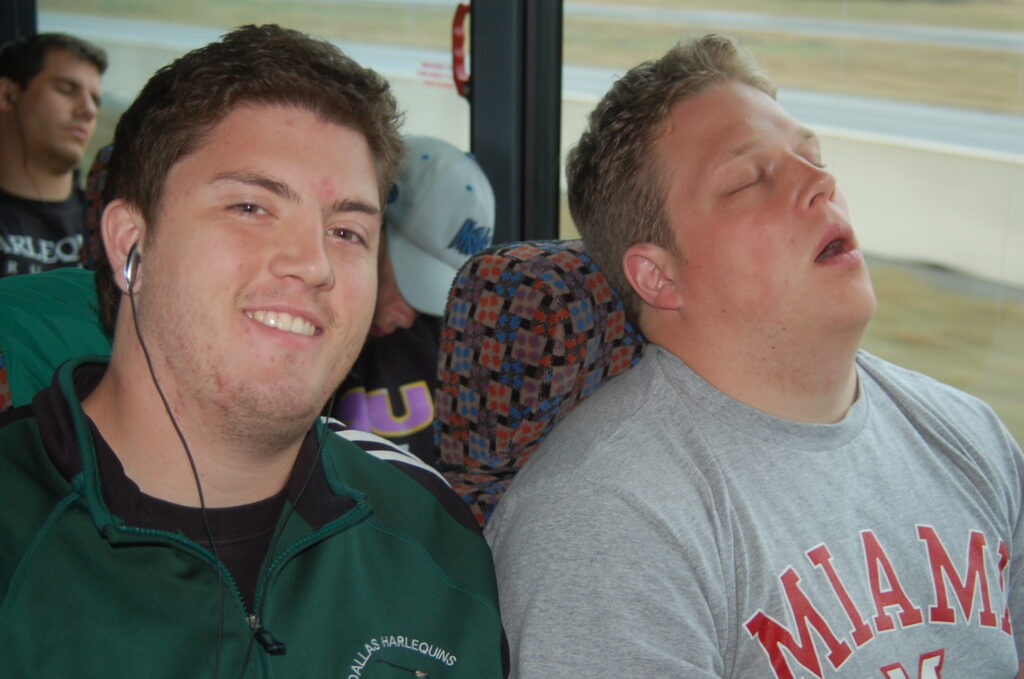
    Scott ‘Rhino’ Girling, asleep next to Blake Rodgers. I spy, Pete Van Scoy in the background

    The Harlequins’ presence in the league also created opportunities for local players to test themselves against national-caliber opposition without leaving Texas. Many of the players who came through the Quins system during the Super League years would go on to represent Texas All-Stars, regional select sides, and USA Rugby programs.

    The Bridge to Professional Rugby

    The Rugby Super League ultimately concluded after the 2012 season as American rugby began searching for a sustainable professional model. Although the league itself is gone, its influence remains visible today.

    Jimmy Jewison posing for the camera.

    The Super League demonstrated that national-level competition was possible in the United States. It created pathways for elite players, raised standards for clubs, and laid much of the groundwork that would eventually lead to professional competitions such as ProRugby, and eventually, Major League Rugby.

    For the Dallas Harlequins, the Super League years represent more than a chapter in club history. They are a reminder that the club helped build the highest level of American rugby long before professionalism arrived. Through the leadership of figures such as Keith and Michael Engelbrecht, and through the efforts of generations of Quins players, Dallas helped shape the landscape of American rugby during one of its most important eras.

  • The Dallas Jackals: Professional Rugby in Dallas, Texas

    The Dallas Jackals: Professional Rugby in Dallas, Texas

    When Major League Rugby arrived in North Texas, the Dallas Harlequins were fully committed to supporting the development of professional pathways.

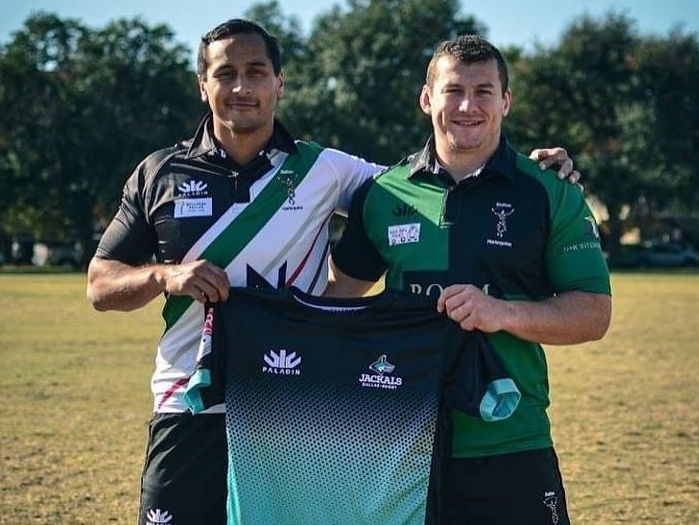
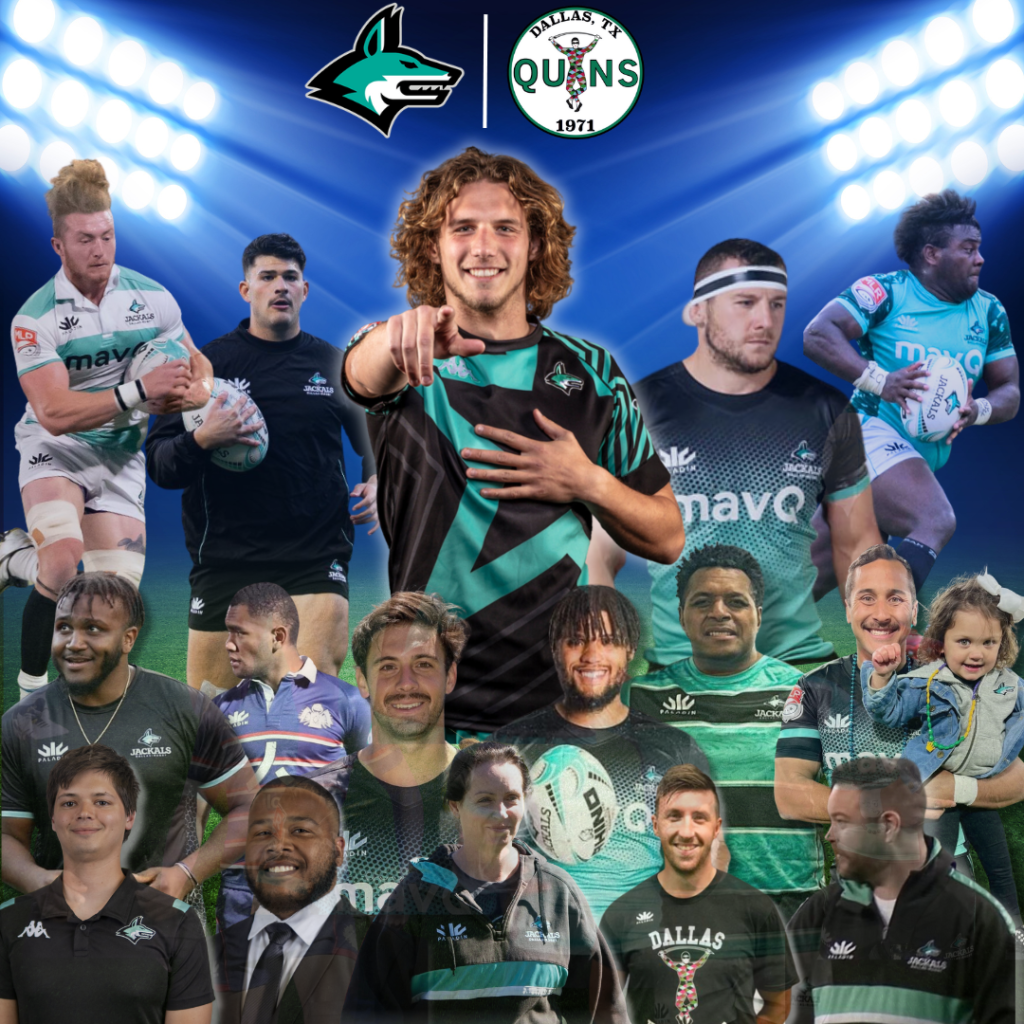
    As the Dallas Jackals prepared to launch, the Harlequins established an official affiliate relationship with the franchise, creating a pathway that connected grassroots rugby, elite amateur competition, player development, and the professional game. Over the following years, that partnership would see players, coaches, administrators, analysts, and rugby leaders move between the two organizations, helping strengthen rugby throughout the region.

    This was posted in May 2024, highlighting the Quins who had been Jackals and congratulating Jarek on his first roster with the organization. Since posting, even more Quins could have been added.

    More Than an Affiliate

    Many clubs can claim to have produced professional players; even more have seen them come in and out of their proverbial doors.

    Few can say they were active in launching the organization itself.

    The connection between the Harlequins and the Jackals extended far beyond the playing roster. As the franchise established its identity, numerous members of the Harlequins community became integral parts of the Jackals operation.

    Elaine Vassie, a former Harlequins Director of Rugby, joined the Jackals organization and became a key figure in Major League Rugby. She served as General Manager and helped steer the franchise through its difficult start. Initially hired as an Assistant GM and the first woman to hold a managerial role in MLR, Elaine took on multiple responsibilities, including head coach, during the team’s challenging launch period.

    Former Harlequins President John Conmee played an important role behind the scenes as the relationship between the organizations developed and professional rugby took root in North Texas.

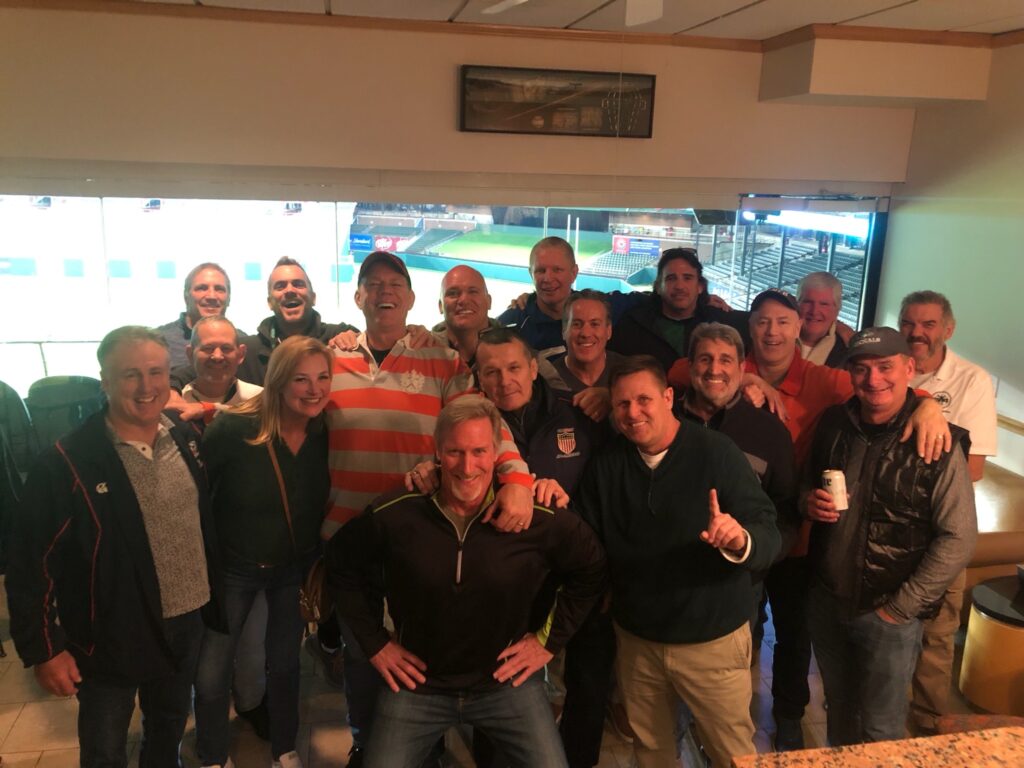
    Quins Suite @ Choctaw Stadium Supporting the Dallas Jackals

    The club’s influence could also be found throughout the rugby department. Texas Rugby Hall of Famer Michael Engelbrecht served as Head Coach of the Jackals Academy, helping identify and develop the next generation of professional players. Terance Hargest became a key figure in the organization as Director of Community Engagement and Academy Director, helping grow the game throughout the region while building development pathways for aspiring athletes. Several players (and coaches) involved with the Jackals Academy also became Quins as a result.

    Behind the scenes, UNT grad and Quin, Seth Heldman, contributed to the professional environment through analytics and film review, bringing modern performance analysis to the organization.

    From executive leadership to player development and performance operations, Harlequins were helping shape the Jackals at nearly every level.

    The Pathway to Professional Rugby

    The affiliate relationship also provided opportunities for Harlequins players to pursue professional rugby without leaving home.

    Several Quins earned contracts or development opportunities with the Jackals as the franchise assembled its roster. Among them were Sweeper Knox, Dylan Carrion, Matt Frings, Romain “Frenchie” Gadeaux, Jarek Szopinski, and Veramu Dikidikilati.

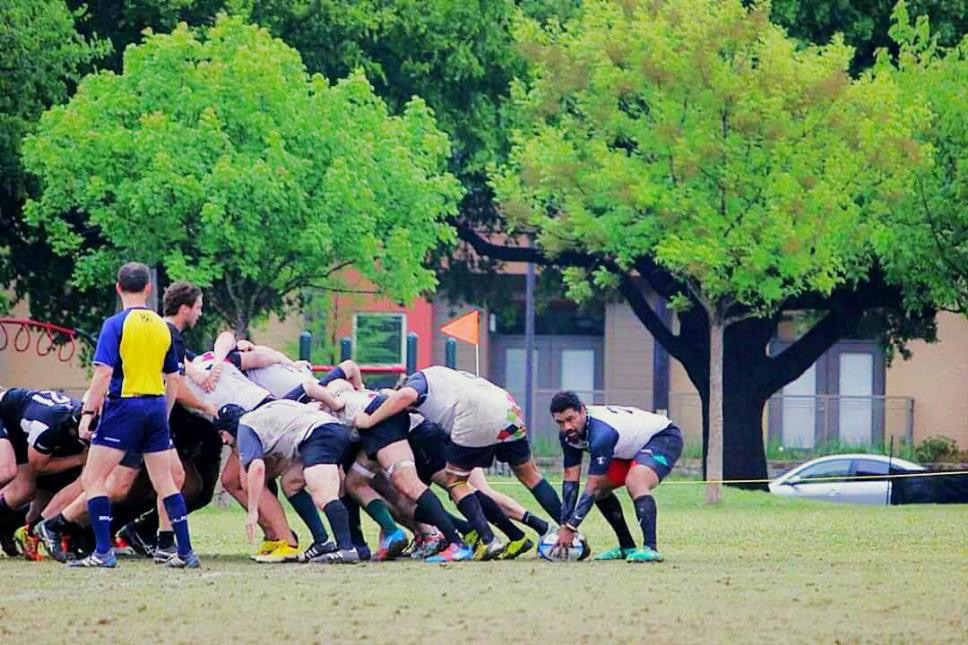
    Sweeper Knox Bulai at 9 for the Quins

    Matt Frings became part of Jackals history when he scored the first home try in franchise history, a milestone that remains one of the most memorable moments from the club’s early years.

    Frenchie went on to become a regular contributor for the Jackals, while numerous former Quins continued to test themselves at the professional level as the franchise grew.

    Matt Frings and Romain ‘Frenchie’ Gadeaux deserve special recognition as the first two Quins to be recruited by the Dallas Jackals

    The pathway also included players such as Danny Carlton, who had previously represented and coached the Harlequins before earning opportunities with the Jackals. Maikeli Naromaitoga, who played for Dallas in 2019, likewise continued his rugby journey through Major League Rugby and other high-level programs across North America.

    For aspiring rugby players in North Texas, the message was clear: the route from club rugby to the professional game was real, visible, and achievable.

    A Two-Way Street

    The relationship benefited both organizations.

    While Harlequins players advanced into the professional ranks, numerous Jackals players also found a home within the Harlequins community. Whether returning from injury, seeking additional game time, or simply becoming part of the local rugby scene, Jackals players regularly pulled on the famous Harlequin jersey.

    Players who represented both organizations included Luke Rizzo, Ryheem Powell, JP Aguirre, Evan Conlon, Jason Tidwell, Jalen Tatum, Asa Carter, and many others.

    The result was a uniquely interconnected rugby environment. Young players training with the Harlequins were able to learn from professional athletes, while Jackals players became active contributors to the broader rugby community in North Texas.

    A Shared Mission

    The Dallas Jackals era represented a significant milestone in the growth of rugby across Texas. For the first time, local players could realistically aspire to progress from youth rugby to club rugby and ultimately to the professional game without leaving the region.

    The Dallas Harlequins played an important role in making that vision a reality.

    Through an official affiliate partnership, the club supplied players, coaches, analysts, administrators, academy staff, and community leaders. Just as importantly, the relationship created opportunities for countless athletes to develop their skills and pursue rugby at the highest level available in North America.

    The partnership demonstrated what can happen when a historic club and a professional franchise work toward a common goal.

    While players came and went, the impact of that relationship remains visible today in the coaches developed, careers launched, and pathways created for the next generation of rugby players in North Texas.

    While we miss the Dallas Jackals, we look forward to what comes next, and will continue to help pioneer the growth of rugby in the DFW, in Texas, and beyond!

  • The Dallas Outlaws – The World Arena Rugby Federation (WAR)

    The Dallas Outlaws – The World Arena Rugby Federation (WAR)

    Long before Major League Rugby, before rugby returned to the Olympics, and before professional rugby found a foothold in America, there was World Arena Rugby.

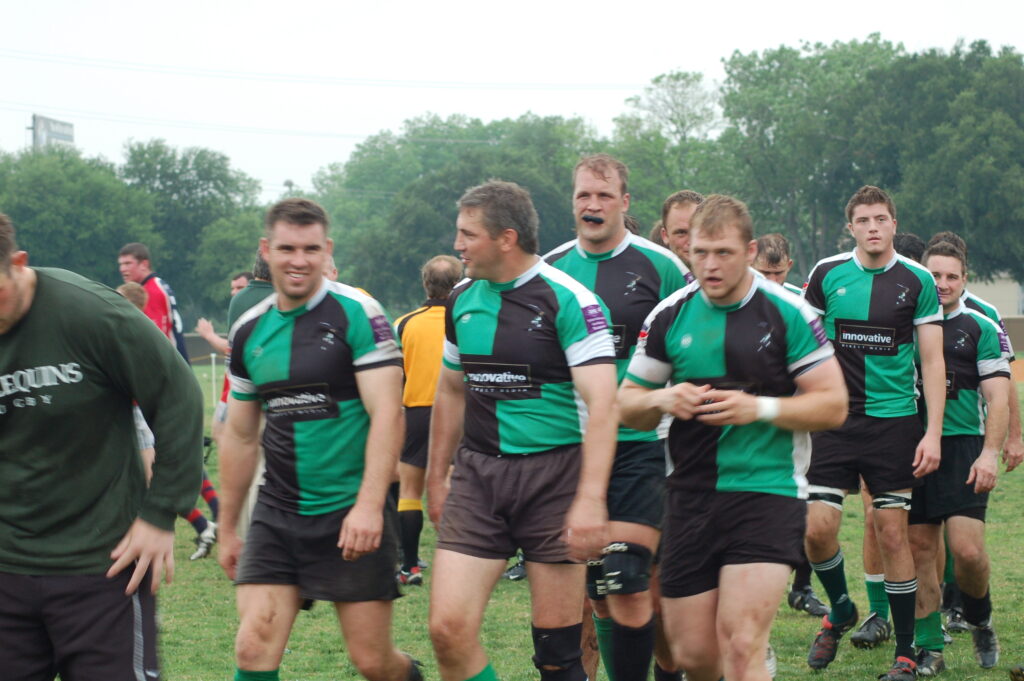
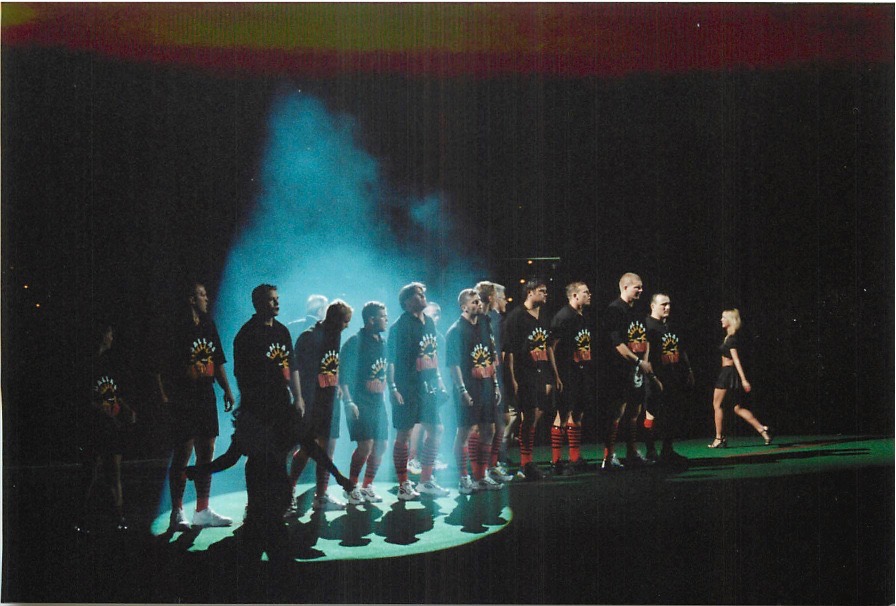
    Pre Match. How many Quins can you spot?

    In the late 1990s and early 2000s, a group of entrepreneurs set out to create a uniquely American version of rugby—one built for indoor arenas, fast-paced entertainment, and Friday night crowds. Their vision was World Arena Rugby (WAR), a modified 7-a-side game played inside hockey arenas on synthetic turf, complete with padded walls, unlimited substitutions, and four quarters of non-stop action.

    At the center of it all was Dallas.

    The league’s flagship team, the Dallas Outlaws, featured several Dallas Harlequins and was coached by former Quin coach Hennie Viljoen. The concept was simple: take rugby’s physicality and continuous play, bring the fans closer to the action, and package it as a spectator sport for an American audience unfamiliar with the game.

    The first major exhibition took place at Reunion Arena in 1998, where the Dallas Outlaws faced the Los Angeles Road Warriors in front of an enthusiastic crowd. Los Angeles escaped with a 41-34 victory, but the response from fans was overwhelmingly positive. Spectators reportedly spent much of the match on their feet, captivated by the speed and intensity of the game.

    According to Hennie Viljoen, the matches were every bit as physical as advertised. He recalls hard collisions, plenty of blood, and a style of rugby unlike anything most players had experienced before. When the teams met again, the Outlaws earned their revenge, defeating Los Angeles and claiming a trophy that we’re sure is around here somewhere …

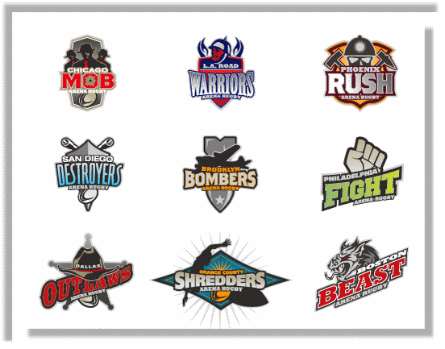
    The league attempted several launches over the years, including plans for a full professional competition and a revival effort in 2013. While those ambitions ultimately never materialized, World Arena Rugby remains one of the most fascinating “what if” stories in American rugby history. It was an ambitious effort to introduce rugby to new audiences, years before the sport’s current growth in the United States.

    From the 2013 Attempt at a Relaunch

    Today, the WAR experiment is largely forgotten. Much of its history has disappeared from the internet, surviving only through old press releases, newspaper clippings, grainy videos, and the memories of those who took part.

    For the Harlequins, however, it remains a unique chapter in club history. A handful of Quins found themselves playing in front of thousands of spectators, helping test one of America’s earliest attempts at professional rugby and proving, once again, that the club has never been afraid to be part of rugby’s next big idea.

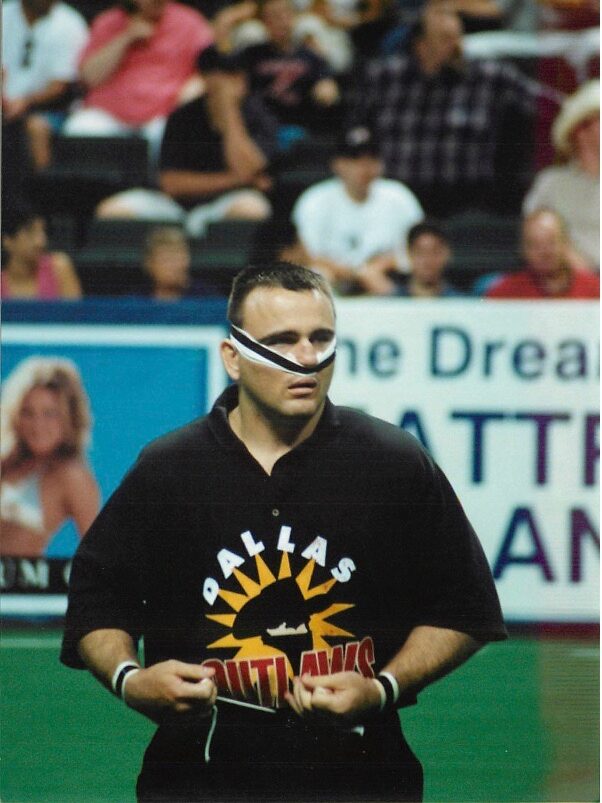
    Scott Schmidt – “95% of the team were Quins. Fun times. I just couldn’t go on without Scott Schmidt, so we stuck stuff up his nose and put electrical tape around his head to keep the stuff inside his nose to stop the bleeding. He was bad ass.” – Coach Hennie Viljoen
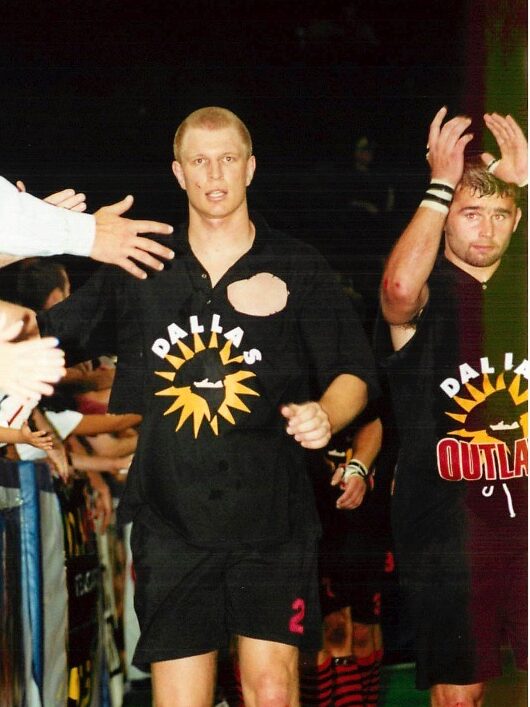
    Corne ‘Slung’ Cronje dialed in before asking players to pay their dues. A wild David “Carebear” Care caught in its normal habitat before mauling its prey.